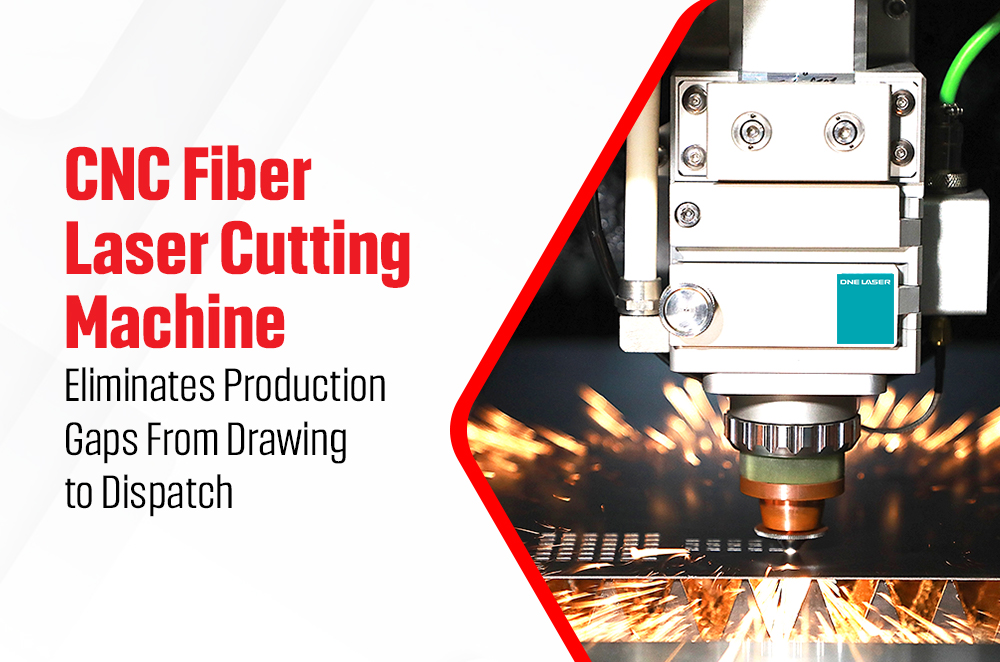
CNC fiber laser cutting machine play a critical role in modern fabrication. Because production today is not only about cutting metal but about maintaining a smooth flow from drawing approval to final dispatch. These start much sooner as the drawings gradually become a programming language, as nesting takes more time than it is expected to take, or as operators waste more time fixing mistakes. These minor disruptions lead to production lapses that gradually cause cost increment, lowered reliability of delivery, and customer confidence. The old cutting systems are also characterized by relying a lot on manual programming and operator experience and this leads to complications in consistency especially when working continuously.
 With increased pressure, rework and scrap increase and dispatch schedules are volatile. A CNC fiber laser cutting machine is used to eliminate these differences by combining design information, programming precision and cutting precision in a controlled process. Fabrication businesses are able to act in planning capacity and foreseeable output without having to respond to problems of daily production. This is why many manufacturers rely on a CNC fiber laser cutting machine to maintain consistent production flow.
How a CNC Fiber Laser Cutting Machine Reduces Drawing to Programming Delay
CNC fiber laser cutting machine reduces manual dependency during programming. Once a drawing is approved, production should begin immediately. In reality, this is where many fabrication units lose valuable time. Design files are usually manually manipulated prior to conversion into machine ready. The things that are based on the experience of the programmer are format conversion, tool path planning, and the choice of parameters. In case corrections are necessary upon trial run the job is repeated in editing. This manual dependency forms a queue when multiple orders happen to be placed in production simultaneously. The machine may have the cutting machine, but this is not active as the programming is not completed. This waiting time raises overhead expenses and discontinues production planning. Minor delays at this phase gradually have an impact on the whole product finishing timeline.
With a CNC fiber laser cutting machine, design files can move directly into production workflows. With integrated CAD and CAM workflow material transition from drawing to nesting becomes direct and structured. The tool paths are produced with precision in regard to the material type and thickness. The system is predictable due to the fact that it adheres to data as opposed to guesswork and hence programmability. The start of cutting takes place when it is scheduled and the workflow continues without any unjustified interruption.
Setup and Material Handling Inefficiencies
After programming is completed, attention shifts to machine setup. In traditional environments, sheet loading and alignment require manual effort. Operators place the sheet metal reference points, and clamp it prior to the commencement of cutting. The misalignment even slightly is enough to influence the accuracy and make a later rejection. As the adjustments are being done, efficient cutting time is wastage.
Material utilization also becomes a concern. Poor nesting leaves unused sheet space, which increases scrap percentage. This loss in the form of materials directly decreases the profit margin over weeks and months. Handling also increases the possibility of scratching the surfaces or minor damage and this is more noticeable in precision work. Nesting software is optimized software that organizes parts in the most effective manner on the sheet surface to optimize the material. Proper positioning systems allow the same positioning to be made without the need to reprimand it manually. Since the setup time is reduced and managed, the machine takes more time to make parts rather than waiting. This transformation enhances the day-to-day production and boosts production stability.
Cutting Inconsistency Under Continuous Production
Even when programming and setup are handled properly, inconsistency during long production cycles creates another gap. The conventional cutting systems can provide reasonable quality at the start of the shift, but the changes can manifest themselves as the workload grows. Downstream operations start experiencing dimensional deviation, jagged edges, or slight burr formation. Heat management is also very important, particularly when slicing of thinner sheets. Too much heat may result in distortion and hence difficulty in fitting when bending or welding. In case of failed inspection of parts, they have to be reworked. Rework wastes time and material and dispatch schedules begin to change.
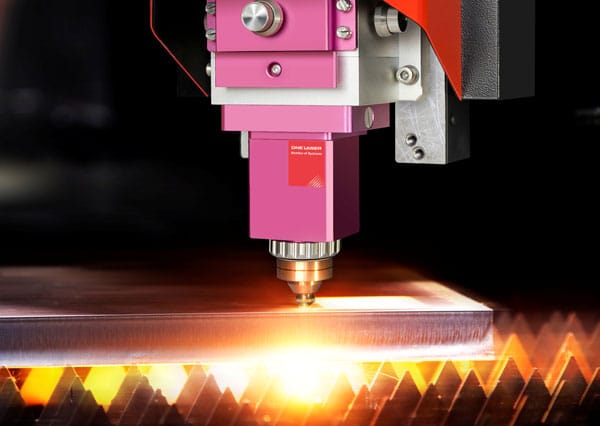
A CNC fiber laser cutting machine maintains stable beam performance. Stable beam quality combined with precise CNC motion control maintains uniform cutting performance across extended operations. The conventional cutting systems can provide reasonable quality at the start of the shift, but the changes can manifest themselves as the workload grows. Downstream operations start experiencing dimensional deviation, jagged edges, or slight burr formation. Heat management is also very important, particularly when slicing of thinner sheets. Too much heat may result in distortion and hence difficulty in fitting when bending or welding. In case of failed inspection of parts, they have to be reworked. Rework wastes time and material and dispatch schedules begin to change. This is where a CNC fiber laser cutting machine ensures dimensional stability.

Post Cutting Delays Before Dispatch
Cutting may be completed successfully, but another delay often appears before the product reaches dispatch. After cutting, the postcutting phase turns disorganized in a lot of fabrication units. The parts should be separated, identified, checked, and sorted based on various orders. In cases whereby batches are mixed or identification is not clear, the workers waste extra time in checking dimensions and matching parts with drawings. This reduces the pace of the end-movement of the goods to the packaging and delivery.
Manual inspection also adds pressure during busy production days. In case of dimensional variation or edge defects, the parts would have to be sent back to be reworked or recut. These return cycles are time consuming with higher production cost. The whole order can wait until all the parts are checked even though it may only need few parts to be handled. This leaves a gap between cutting completion and dispatch status. This step in production is simplified with precision cuts and repeatable-accuracy. In the event that components are manufactured with homogeneous dimensions and polished edges, sorting and inspection is quicker. With teams, minimal time is wasted in rectifying errors and more time in filling orders to be delivered. Due to this, the flow of cutting table to dispatch area is smoother and predictable.
Connecting the Workflow From Drawing to Dispatch
When the earlier gaps are reduced, the entire production flow begins to change. The process is organised into stages instead of passing through fragmented steps. Drawing files go straight to programming, programming goes fast to nesting and the cutting process starts without extended delays in preparation. One stage facilitates the other and this enables the production units to have a consistent production flow.
Digital integration plays an important role in this transformation. The data on design, material parameters and cutting is all kept in the same workflow environment. It is due to this that operators do not have to make manual adjustments on each job. The cutting conditions are predefined in the system, which provides accuracy and repeatability of the system with different orders and materials. Planning of production is also made more dependable. With programming, set up, and cutting, the managers can predict the job completion time with more confidence since the three behaviors are predictable. Machines wait less and take more time to create parts as compared to waiting as machines that require corrections or adjustments. The balance assists fabrication companies to deal with numerous orders without the need to interfere with delivery schedules.
Over time, this structured workflow strengthens overall operational efficiency. The usage of materials also becomes better. The production rates become steady, and teams get more time to concentrate on the quality control. Instead of solving problems that occur on a daily basis. The implication is that the relationship between drawing approval and eventual dispatch becomes smoother, as is imperative in sustaining competitiveness in the contemporary fabrication markets.
Business Impact and Operational Benefits
When production gaps are reduced, the improvement becomes visible across the entire fabrication process. Lost time in programming delay, and setup adjustments and rework are converted to productive cutting hours. This is a boost in production without the inclusion of additional machines or working shifts.
Material utilization also improves because optimized nesting reduces scrap and protects profit margins. At the same time operators do not have to put much effort into correcting mistakes and spend more time overseeing quality. The workflow becomes stable and the production planning is facilitated and the dispatch schedules are also stable. Consequently, fabrication businesses are able to deal with orders with more confidence. The steady production flow ensures enhanced delivery performance and enhanced long term customer relations.
Conclusion
Production delays in fabrication rarely come from a single stage. They are in the form of small intervals between drawing approval, programming, setup, cutting and dispatch. When such gaps are not controlled, they gradually diminish efficiency, material waste, and the schedule of deliveries. An example of adding stability to this working process is a CNC fiber laser cutting machine, which allows the accuracy of programming, a shorter time spent setting up the machine, consistency in the quality of cutting, and facilitates the flow to dispatch. When all the production processes are coordinated, the fabrication companies can work with more confidence as well as predictable output.
Businesses seeking to enhance their fabrication power have the opportunity to explore high tech CNC fiber laser cutting machine solutions at Business Point International. With reliable technology and industry focused support, Business Point International helps manufacturers build efficient and future ready production systems.