Many printing businesses reach a stage where customer demand starts changing faster than their production capabilities. Most projects were based on standard materials and standard requirements a few years ago. Nowadays, customers are demanding printing on acrylic, glass, wood, PVC boards, promotional products, and more. These requests open new doors as well as reveal a shared problem. The machinery that is good for standard materials may not work with a broader range of materials. Due to this, businesses end up rejecting projects, outsourcing specialist work or spending additional time to satisfy client expectations.
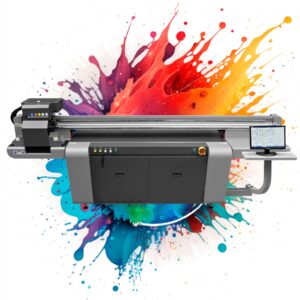 The market has undergone many changes. Brands desire unique stands that get noticed. Retailers are seeking tailored visual merchandising. Interior designers look for decorative prints to bring a sense of personality into homes and offices. Meanwhile, manufacturers must have identification, labels and graphics that can meet the challenges of harsh environments. It is often not possible to meet these requirements with multiple machines. The extra equipment adds to the production workflow, adds cost and takes up valuable floor space. Many companies don’t have a problem finding customers. The current challenge is to be able to manage a greater variety of applications efficiently without having to constantly increase their equipment stock. The UV flatbed printer is a convenient answer to this. It facilitates direct printing on a wide range of materials, which enables businesses to break the boundaries of conventional printing solutions and explore fresh avenues in signage creation, branding, industrial printing, decor and customized product manufacturing. This technology has proven to be an invaluable asset in modern day printing for businesses seeking to broaden their capacity, yet stay efficient.
Material Limitations Often Become Business Limitations
Many businesses assume material limitations are simply production challenges. In fact they can turn into business challenges. If a customer wants to print on something the printers aren’t capable of, the options will be sparse. The project is externalized, rejected or postponed. This can be easy to handle for a while, but it can have a long term effect. One customer may need more branding tomorrow than they need today, and for acrylic signage, that need could be for prints, stickers, or other products. If the business is unable to perform those functions, the customer could begin looking for a supplier that provides additional services. This over time can impact customer retention and growth opportunity. Material constraints might also stifle companies’ ability to break into new markets. They do not diversify into such things as decor, promotional products, retail branding, or industrial applications, but stick with a limited number of items. Printing on various materials is no longer a production opportunity. It’s now come into its own as a vital element in remaining competitive and meeting the changing expectations of customers.
Why Customers Are No Longer Looking for Standard Printing Alone
Customer expectations have evolved beyond basic printing requirements. Businesses today want solutions that help them stand out, strengthen their branding, and create a stronger visual impact. A key driver of the change is the strong focus on personalisation. Whether it’s using customized promotional products for brand marketing or creating unique retail displays, customers are increasingly seeking applications that showcase their brand rather than becoming a part of the ordinary.
Meanwhile, sectors like retail, interior design and hospitality are increasingly committing to printed products which can be directly bonded to various materials. Various industries are seeing decorative panels, brandable fixtures, product displays and industrial identification graphics become more common. The demand continues to grow and printing companies are being challenged to provide more than just the traditional print product. Those companies that can support more applications are also better positioned to attract new customers and generate new revenue streams.
What Makes a UV Flatbed Printer Different From Conventional Printing Systems?
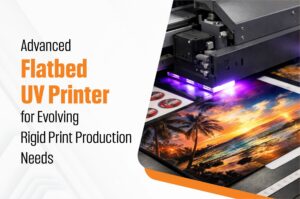
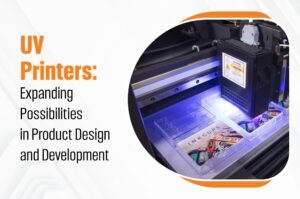
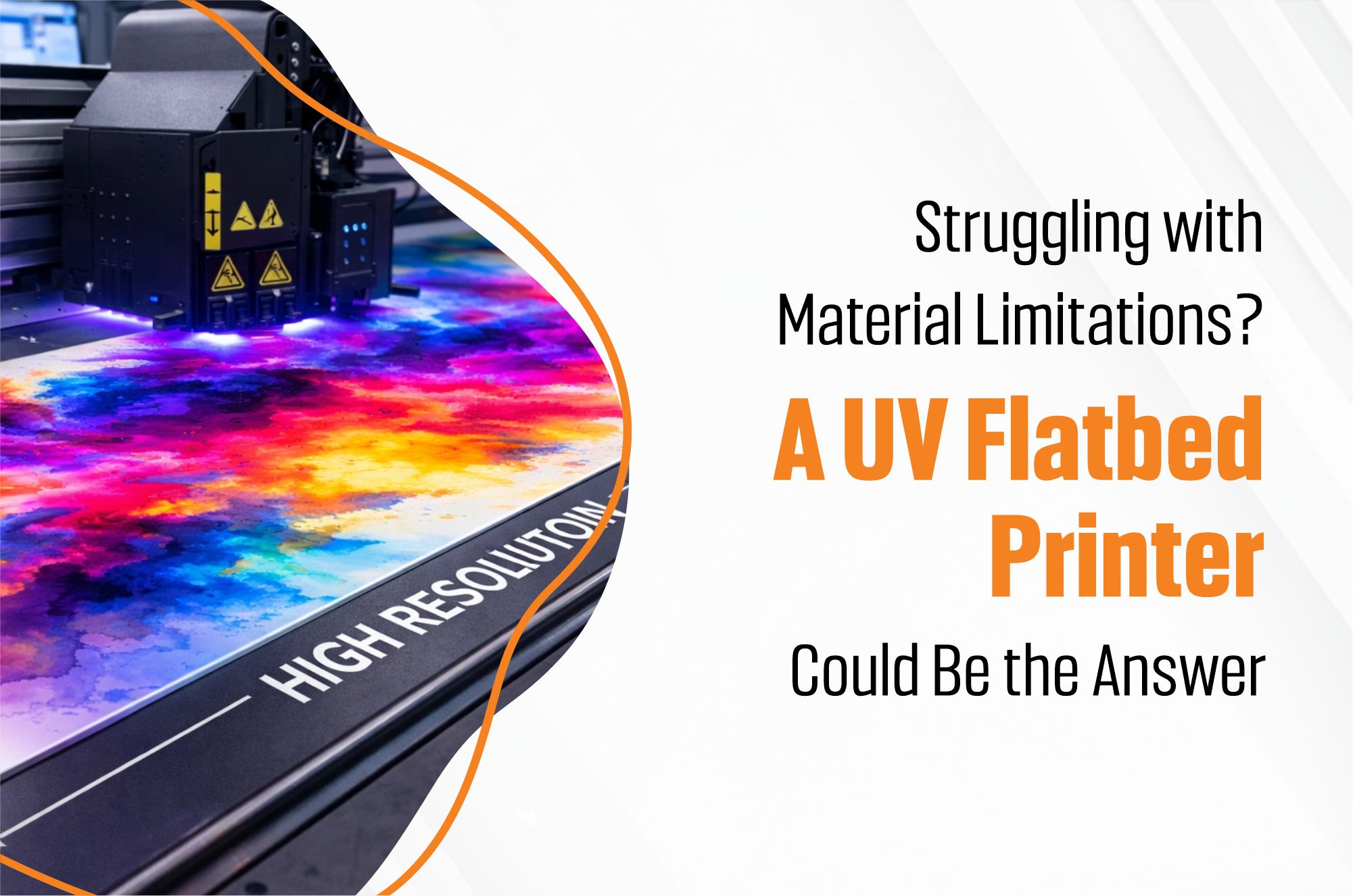
Many conventional printing systems are designed for specific applications and materials. They work well in that range, but it can be difficult to obtain a good print when customers want to print on a surface that requires another type of print process. A UV flatbed printer takes a unique approach to printing. It prints directly on to the material rather than transferring to a transfer medium that would then have to be adhered to a surface. This makes it easier to produce and makes businesses more versatile with the use of one machine for a variety of applications. Another benefit is due to UV curing. Almost instantaneously, UV light cures the ink as it is being printed. This decreases the waiting time and enables the flow of materials through production to be more effective.
The most significant advantage to businesses is flexibility. With a UV flatbed printer, you can handle all your signage, branding, decor, promotional products and industrial applications without having to use several dedicated systems. This makes it easier for businesses to expand their service offerings without running into the hassle of having to have a completely new production process. Instead of buying separate equipment for various applications, companies can leverage a single solution to better satisfy a larger customer base and meet market demands.

What Materials Can a UV Flatbed Printer Handle?
One of the primary reasons businesses buying UV flatbed printer is its versatility in printing in various materials. Rather than just cater to a few substrates, businesses can diversify into various applications and customer needs.
Acrylic and Signage Boards
Acrylic is commonly found in retail displays, corporate signs, the graphics of exhibitions and promotion displays. Direct printing on acrylic is an effective way to get vibrant graphics, while maintaining a professional look.
Glass and Decorative Panels
Printed Glass is becoming a common use in offices, hotels, restaurants, as well as residential applications. Decorative panels, partitions and customized interior elements present new opportunities to businesses in the decor market.
Wood and Furniture Components
Wood surfaces can be customised to create branded furniture features, wall art and decorative displays. This provides the opportunity for projects outside of the realm of printing.
Metal and Industrial Applications
Printed identification plates, equipment labels, safety signs and branded components are often a must for manufacturers. Businesses can ensure long-lasting and printed in a professional way to their metal customers.
PVC, Foam Board and Display Materials
PVC and foam board are common materials used in retail promotions, point-of-sale displays and temporary signage. These apps are still one of the key sources of demand in the advertising and retail industries.
Promotional and Customized Products
Businesses can also produce personalized gifts, branded merchandise, and promotional products for corporate events and marketing campaigns. This enables them to penetrate new market segments and optimise their production capacity. The UV flatbed printer allows businesses to break out of the confines of traditional printing methods and open up opportunities in various industries.
Questions to Ask Before Investing in a UV Flatbed Printer
Selecting the right machine is not as simple as just looking at the specs. The biggest investment you can make is one that suits your business plans, production needs and future expansion strategies.
What Materials Will You Print Most Often?
Various companies specialize in various applications. A knowledge of the materials to be used frequently will help in deciding the most appropriate machine configuration.
What Production Capacity Do You Need?
A machine should be able to accommodate the current load and the load to come. With any growing business it is important to think ahead about what’s likely to be produced in order to prevent limitations.
What Level of Print Quality is Required?
High quality output may be necessary for applications like retail branding, decor and high end promotional items. Before purchasing, consider customers print quality expectations and determine whether they will be fulfilled.
Is Technical Support Available?
After sales support is an important factor in maintaining productivity. The installation process, operator training and technical support can make a huge difference to the overall ownership experience.
Can the Machine Support Future Business Growth?
Printing operations change quickly. The benefits of investing in a UV flatbed printer that will accommodate new applications and growing customer needs may outweigh these up-front costs.
By assessing these factors, businesses can make informed decisions and choose a solution that will meet their current needs as well as future opportunities.
Why Technical Support Matters When Choosing a UV Flatbed Printer
Investing in a Flatbed UV Printer involves more than selecting the right machine. Technical support is crucial for maintaining productivity, reducing downtime, and achieving quality prints. Installation, operator training, maintenance instructions and technical assistance can be provided to help maximize business investment. Throughout this process, Business Point International helps customers with their business by offering leading print solutions, expert guidance, and post-sales support. Whether it’s selecting the right machines, ongoing support, or empowering businesses to take on new printing ventures with confidence, it’s all about enhancing efficiency, boosting capacity, and ensuring a seamless printing experience.
Conclusion
With the changing demands of customers, the ability to print on a variety of materials has emerged as another key benefit for contemporary printing companies. A Flatbed UV Printer overcomes many of the disadvantages of conventional printing techniques for a wide range of applications, such as signage and branding, decor, industrial products, and customised products. In addition to increasing output, it opens the door to more customers, new markets, and diversified product offerings, all without having to buy and install a number of specialized systems. In today’s evolving business landscape, where adaptability and staying competitive are paramount, the investment in the correct UV flatbed printer can prove to be a smart move for long-term growth and operational flexibility.