A printer might be a shiny object on paper, but be the wrong fit for your production floor. While high print speeds and more advanced specifications and wider formats might catch your interest, they won’t tell you whether the printer will be able to handle your everyday work efficiently. The better question is not, “Which large format printer has the best specifications?” It is, “Which printer fits the work I actually produce?” That answer depends on much more than machine speed. All of these factors will depend on your substrates, needs for ink, workload, print quality, finishing process, maintenance methods and operational costs. The quickest machine in the world will not be a good investment if it is not used correctly for your business. In this guide, we consider the decision from the production side, evaluating a large format printer based on the types of jobs that it should print, the workflow that should go around it and what your customers expect it to produce.
 Start With the Products You Need to Produce
While choosing the right large format printer, it is important to first understand what you are printing. A company that specializes in outdoor banners and signage will likely prioritize different things than one that manufactures vehicle graphics, indoor displays and/or textile prints. Prior to comparing print speed or resolution, check your normal work sizes, monthly volume, substrates, finishing requirements, and expectations of turnaround for your regular jobs. These details give a clue to what the machine has to deal with repeatedly. Another important thing to consider is print width. If you have a lot of smaller orders you might want to look at a wider machine, but if it does you might only get a little bit of value.
This is also true for print quality. Some close viewing applications require extremely high detail while some of the graphics can be viewed several metres away. Therefore, the decision for equipment should be driven by your product mix. After you know what work, materials and output your business really requires, you can evaluate a large format printer on the specifications that really matter in production, and not just the specs with high numbers.
Map the Entire Production Workflow Before Choosing Equipment
A large format printer does not work alone. The printed sheet or roll is not yet a product until it has gone through a number of processes. The speed of an order can be affected by the preparation of Artwork, RIP processing, Media loading, Printing, Drying or Curing, Inspection and Finishing. This is why a machine that can print at amazing speeds may not be able to improve the overall speed of production when compared to another stage of production that is slower.
Evaluate your current processes before buying equipment. Think about how files are set up, the frequency of changing media, drying/curing time for prints, and what happens right after the prints are made. As orders grow in volume, lamination, cutting, trimming, hemming and mounting can become production restraints. A proper large format printer should be placed in this sequence and not stand alone.
The goal is to improve the movement of a job from digital artwork to finished product, not simply to make the printing stage faster.
Match the Substrate and Ink Technology to the Application
The feed material may be as significant as the machine. Vinyl, banner media and adhesive films, as well as fabric, wallpaper, and backlit materials, may react differently to ink and heat and have varying thicknesses and flexibility that can impact feeding and print consistency. So when evaluating a large format printer, it is important to consider the materials you regularly print and not a lengthy list of media that the printer could accept.
Ink technology ought to be similar. There are several applications that include flexible signage that can be ideally covered by eco solvent systems, and there are applications where the output is required to be cured, which can be these systems and UV systems. When polyester based textile work is an important part of the business, sublimation is the usual choice of production route. It’s better to begin with the completed product and then pick the substrate and then decide which system of inks will produce the desired outcome over a consistent period of time. This way technology is not deciding the production need, it is being used to make the decision.

Define Print Quality Through the Final Application
Do not base print quality on one printability parameter, like resolution. It is common for many buyers to compare machines based on DPI, believing that the more the better. In fact, the quality of the print is dependent on the graphic’s actual use and viewing.
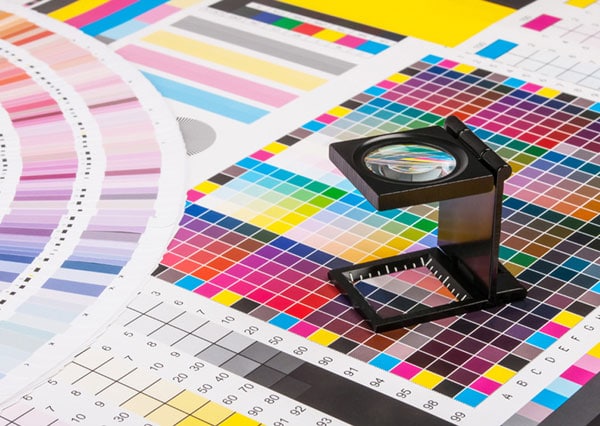
There are different levels of detail that can be used in a retail display, which is much smaller than a large outdoor display. Other differences include fine text, gradients, photographic images and solid brand colours. That’s why, for instance, you’ll need to use different print settings for different jobs. It is also crucial that the colours are consistent. The design you see on a computer screen can look perfect on the computer screen but change when printed due to the properties of the substrate, ink characteristics and print settings. It may be more important to keep the same colour in repeated orders than to make one stylish order.
When you consider a big format printer, consider your customers’ requirements for the end result. The aim is not to get the maximum specification. The objective is to produce clear, accurate and repeatable results, which will be similar to the intended use application.
Look Beyond the Machine: Maintenance, Environment and Serviceability
A large format printer is a investment in the long term, so the ownership does not end when installing the printer. The performance varies every day based on the condition of the machine, its location and the speed at which any problems can be resolved. Regular maintenance is significant in maintaining the print quality and also decreases unexpected interruptions. Consistent output over time can be maintained through printhead cleaning, nozzle inspections, maintenance of the media path, and proper shutdown procedures. Failure to do these simple duties could result in extra downtime, material waste, and delivery delays.
Production environment also needs to be considered. It is important to consider the space available, media storage, electrical needs, and operator motion before installation. Even though a machine physically fits into the facility, it can still cause workflow issues when there is insufficient room for loading, unloading and finishing printed materials. Another should not be forgotten is the service support. Consider technical support, parts, operator training and maintenance before investing in a large format printer. The quality of the service provided is sometimes more important than the specifications given in a product catalogue, and can affect long term productivity.
Build a Machine Selection Framework Before You Buy
Choosing a large format printer becomes much easier when every decision is measured against a clear set of production requirements. Rather than simply looking at the specs of several machines, design an evaluation framework that’s relevant to your business.
The first step in identifying the most common substrates and products that create a lot of your orders. Now think about how many prints you will need, what width you need, what ink technology you want, and the quality of print you need to meet your customer’s expectations. All of these will help you limit your choices and avoid spending unnecessary money on features that you will never use. Operating cost, maintenance and after sales support should also be considered and reviewed. The large format printer should meet your current requirements and be flexible enough to accommodate future demands. Meanwhile, simply installing more machines if they are bigger doesn’t necessarily lead to greater profitability.
The fastest or most advanced is not always the best investment. The key to a successful decision is the consideration of production requirements, operating costs, flow of work and long term business objectives. Combined these factors make large format printer selection a strategic business decision.
Conclusion
When it comes to choosing a large format printer, there are many factors to consider that can not be limited to just speed, resolution or machine size. Those specs give you some information but this isn’t enough to tell you how the equipment will function in your production setting. The better way is to examine the process as a whole. Begin with products to be produced, then work out the substrate for the applications, the most appropriate ink technology, workflow, production capacity, print quality, maintenance and operating costs. This makes it easier to visualize how the machine will fit into daily operations.
For each print business, a particular production model exists, meaning there is no single solution applicable to all print businesses. The best large format printer for your business is one that will meet your current workload needs and also that will be flexible enough to grow and evolve as customer needs evolve. An efficient, planned investment should result in greater efficiency, sustainable production and long term production objectives. If the choice is made on the basis of actual operational needs and not just specifications, the machine can become a production asset, rather than just another piece of equipment.