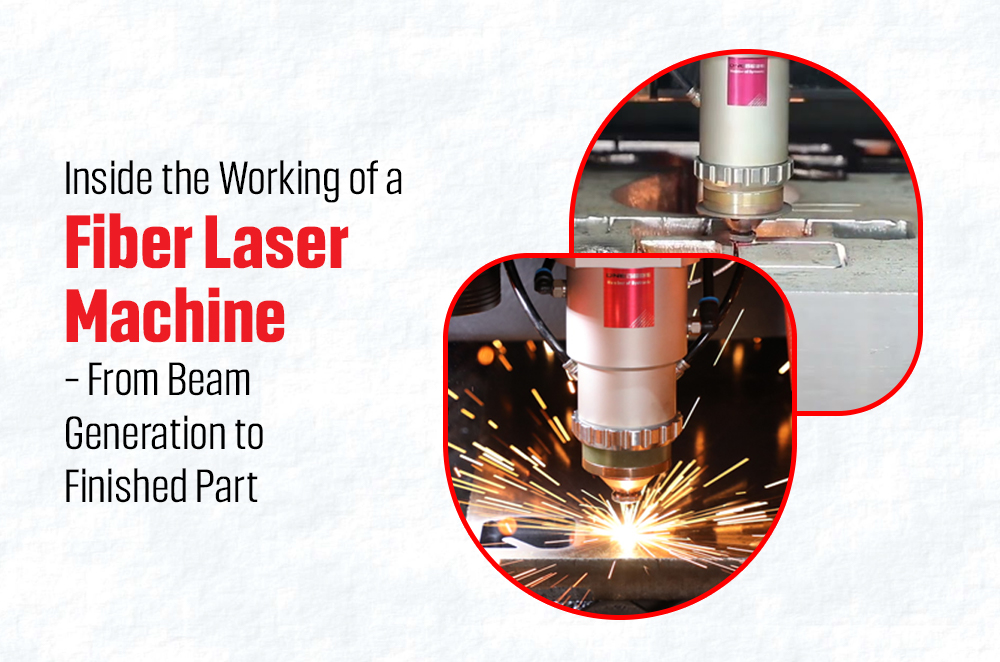
Many factory owners and production managers ask this question. How is it possible to cut metal that quickly and accurately with such precision as a fiber laser machine when the operator presses the start button? It might seem to be an easy task on the surface, but once the machine starts, a complicated and well managed chain starts immediately. Laser energy is produced using electrical energy, the beam is enhanced within optical fiber and a highly focused source of light is sent into the cutting head.
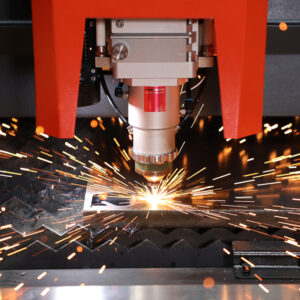 Meanwhile, the CNC control system interprets planned instructions and directs the motion system with the highest precision. The sheet is fixed and the cutting head travels at new digital coordinates, which were previously calculated. All movements, all impulses of energy, all discharges of gases are well coordinated. This is the reason why a fiber laser machine would provide smooth edges, uniform dimensions and repeatability even in the course of a long production cycle. Grasping of this internal working assists the manufacturers to select the correct machine, use it effectively and sustain its performance over time free of guesswork.
How is the Laser Beam Generated Inside a Fiber Laser Machine?
Many people believe that a fiber laser machine simply produces a powerful light and directs it toward metal. As a matter of fact, the beam generation procedure is much more scientific. The laser source is located inside the machine and it uses electrical power to activate diode modules. Light energy is produced using these diodes, however the light produced is not yet powerful enough to cut metal. It must be amplified. In this regard, optical fiber is taking centre stage. The light passes a special constructed fiber cable doped with rare earth elements. The light becomes powerful as it passes through this fiber and the amplification becomes controlled. The energy accumulates over time in the closed fiber circuit until it forms a high intensity and stable laser beam that is able to cut metal with accuracy.
One of the reasons a fiber laser machine is highly efficient is because the beam generation happens inside the fiber itself. In the traditional system, the light is reflected and directed through the use of mirrors, and in this case the light is contained inside the fiber cable. This minimizes energy wastage and enhances stability. There are no external mirror alignments to be considered, and therefore the system can be able to sustain consistent beam quality throughout the long production hours. The outcome is a highly concentrated beam that has a high power density that can be focused quite tightly to a very small spot. It is that small point of focus that enables the fiber laser machine to cut complex shapes, sharp corners, and intricate designs without adverse effects on the edge. The idea of beam generation is not merely the process of generation of light. It relates to making controlled, amplified, and focused energy, which would be stable in industrial conditions.
How Does the Beam Travel Inside a Fiber Laser Machine and Reach the Cutting Head?
After the beam is generated, it must travel safely and efficiently to the cutting area. Within a fiber laser machine, the beam is transported in a flexible optical fiber cable, which links the laser source of a machine to the cutting head. This closed system avoids dust or misalignment of the beam unlike the traditional system which involves the use of mirrors since the beam is held stable and secure. Due to such structure, the energy loss is minimal and the quality of beams is maintained.
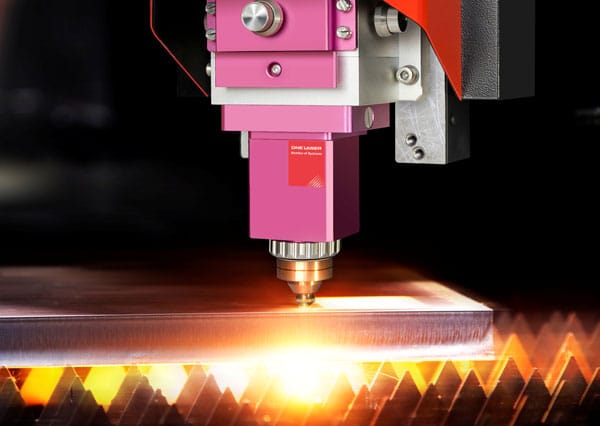
Once the beam reaches the cutting head, focusing lenses concentrate it into a very small point. This small hole defines the accuracy and cut edge quality of the cut. Fiber laser machine systems used today also have automatic height control in order to keep the nozzle and sheet the right distance apart. This guarantees consistent cutting capability in constant production.
How Does the CNC System Control a Fiber Laser Machine During Cutting?
A fiber laser machine depends heavily on its CNC system for precision. The control software translates a design file into precise instructions of movement once loaded. The CNC system determines the speed, direction and cutting sequence then the process starts. The servo motors during operation control the cutting head in a smooth movement over the sheet as the system regulates the beam power with the speed of motion. This balance is necessary since excess power or wrong speed may influence the edge quality. The fiber laser machine also involves the use of nesting software to help elements to be organized effectively on the sheet in a manner that will minimize the wastes of material. In layman terms, the CNC is the brain, which improves the coordination of movement, power, and accuracy to provide the same cutting results.

What Happens When the Laser Beam Touches the Metal Surface?
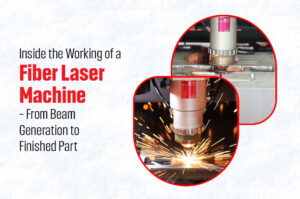
When the focused beam of a fiber laser machine finally touches the metal surface, energy transfer happens instantly. The light becomes highly concentrated and the amount of heat it produces is enormous at a very small area that melts the metal within milliseconds. Even some of the metal can even vaporize depending upon the material and settings used. It is this controlled melting, which enables the fiber laser machine to cut small kerf width and sharp edges without physically touching the sheet.
At the same time, assist gas flows through the nozzle at high pressure. This gas pushes the molten material away from the cut line and keeps the area clean. The CNC system operates the beam power, cutting speed and gas pressure very carefully in order to ensure smooth edges. When this balance is right, the fiber laser machine will give clean cuts with little burr and less heat effect on the surrounding material. It is this interaction of light energy with metal that is the fundamental process making modern laser cutting both precise and efficient.
Why Is Assist Gas Important in a Fiber Laser Machine?
Many people focus only on laser power, but assist gas plays an equally important role inside a fiber laser machine. The molten metal will need to be removed promptly and efficiently when the beam is melting the metal. The assist gas passes through the nozzle with the beam of laser and forces the melted metal out of the cutting section. This ensures that reattachment is avoided and also that smooth edge finish is maintained.
The effects of the various gases are different. Mild steel is commonly cut with oxygen since it promotes one of the chemical reactions that enhances the speed of cutting. In its turn, nitrogen is usually applied in the cases when a clean and oxidation free edge is needed, particularly, stainless steel. The fiber laser machine regulates the gas pressure keenly since low pressure can leave slag behind whereas high pressure can disorient the cut line. In real life, proper choice of gas and the pressure applied have a direct bearing on the surface quality, edges and the cutting performance.
What Determines Cutting Quality in a Fiber Laser Machine?
Many users assume that cutting quality depends only on laser power, but a fiber laser machine produces clean results only when several factors work together. The first element is the quality of the beam. Stable and well focussed beam forms a narrow kerf and smooth edges. Edge finish may vary when the position of focus changes even slightly. This is the reason why the new generation fiber laser machine systems have automated height sensors that keep the nozzle at the right distance to the sheet surface.
Speed of cutting also has a significant contribution. When the machine is too fast, the beam does not always enter the material. In the event that it moves very slowly, the excess heat may creep to the edge and worsen the burr. Surface appearance is also determined by the type of gas and pressure. Correct nitrogen pressure e.g. assists in bringing oxidation free edges on stainless steel. Such minor details as cleanliness of nozzles and lenses affect final output. In real world production, balance between power, speed, focus, gas and machine stability determines cutting quality and not a single specification number.
Conclusion
A fiber laser machine might look basic on the surface, but internally, it works on a well synchronized series of energy processes, beam transfer, motion control, gas control, and temperature control. All the components collaborate to convert electrical power into a focused beam that is able to make correct and repeatable cuts. By having this internal system in balance, uniform quality of the edges, heat impact is controlled and production output is stable. Knowledge of the operation of the fiber laser machine on both ends will assist manufacturers to get past the superficial requirements. Decision makers are able to consider beam stability, CNC precision, cooling reliability, and gas configuration instead of making selection of machine that is based only on claims of wattages or speed. This insight results in improved operation, maintenance planning as well as enduring performance stability.
In case you have a mind to invest in a quality fiber laser machine, then the team of Business Point International can help you with proper technical setup depending on your production requirement. Contact Business Point International today to discuss your application and choose a solution that supports long term growth.