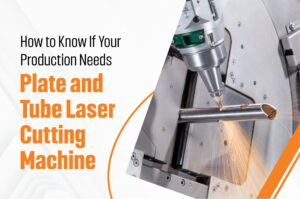
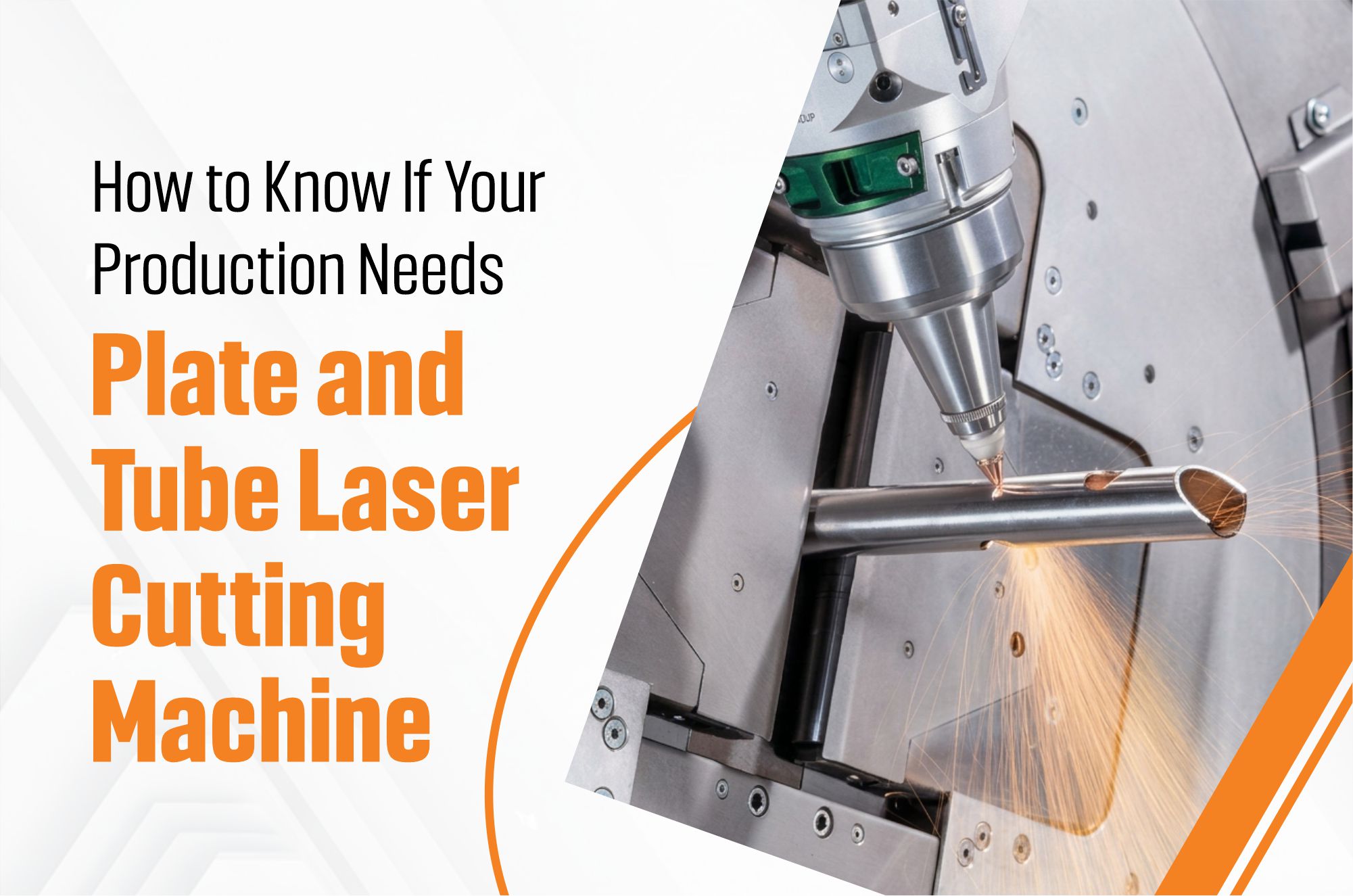
There’s a reason when a fabrication business is looking for a new cutting machine. Orders grow, combinations of materials become more complex, delivery commitments shorten or simply too much work begins to shift between machines and offsite suppliers. The question shifts from how to cut the next job to whether the existing production system is still efficient enough. At this point, it may be necessary to consider using a plate and tube laser cutting machine. In certain cases, sheet and tube cutting can be an appropriate investment for sheet metal fabricators that produce a variety of metal parts, but it doesn’t necessarily work for every shop. It is dependent on the product being produced, the frequency of production, the materials and thicknesses used, and the amount of time lost in your current workflow. The right machine is therefore not the one with the longest specification sheet. It’s the one that works with the production that’s currently flowing through your production floor, plus the production that you’re anticipating. So, when does your production really need one?
Signs That Your Production Is Ready for a Plate and Tube Laser Cutting Machine
The need for a new cutting system is typically felt during the production process and not in the accounts. A workshop might still be in the process of placing orders but small delays, repeated setup and outsourced work start to accumulate. Well, these are some of the initial indicators that the current cutting system is already over-extended.
 You Regularly Cut Both Plate and Tube
A combined cutting system can integrate the cutting of sheet and plate with the cutting of round, square and rectangular tubes into a more streamlined and efficient process. This is especially helpful when the same project needs to be flat parts and tubular parts. Now, the necessary components can be made by a machine that can process both types of material, thus eliminating the need to move the work from one cutting process to another.
Tube Cutting is Being Outsourced
Outsourcing isn’t always a bad thing. When the cutting of tubes is regular in your orders, it becomes one. Each outsourced task can lead to another production dependency. It requires coordination with the supplier, drawings, waiting for parts and inspecting them when they are received. When time is of the essence, this can be even more challenging. If cutting tubes is a frequent need, it might be better to have it available in house to coordinate and deliver the product on time.
Manual Preparation Is Taking Too Much Time
Laser cutting isn’t just a mere replacement of cutting methods. It can minimize the preparation work around the cutting process, as well. When the same type of component is being manufactured in batches, the marking, drilling and profiling operations can be time consuming as they are repeated many times and need to be manually laid out. When a prepared digital design is used for cutting, it can be done in a repeatable fashion, with less manual input, if controlled by CNC.
Your Job Mix is Becoming More Varied
The equipment needs of a workshop that makes the same part every day are different from those of a workshop that has to deal with a variety of fabrication orders. The more flexible, the better, as customers are asking for various dimensions, designs and profiles. If your production demands requires the parts to be cut into various shapes and sizes, and several different cutting operations are not feasible, then you should consider a plate and tube laser cutting machine.
Delivery Pressure is Increasing
The most obvious indication may be the lack of time between receiving the order and completing the component. When cutting is consistently the limiting factor, sometimes it’s not enough to simply add capacity. An overall review of the workflow should be conducted. Faster order flow through the shop can be achieved by reducing operation speeds, setup times, material handling, programming and parts movement between operations. This is why it is important to consider your actual production pattern instead of a machine specification alone. If you have multiple of these scenarios, then take a look at what you’ve saved up to cut. Whether a plate and tube laser cutting machine meets the requirements of the production really depends on the material, the thickness, the tube size and the part design.
Look at the Materials and Shapes You Actually Cut
Check the materials and components that are being moved around in your workshop before selecting a plate and tube laser cutting machine. The machine configuration should be dependent on your production mix of products.
Depending on the material type of mild steel, stainless steel and aluminium, different requirements can be necessary for cutting, and the thickness of the material will have a direct influence on the laser power required. This is also true of tube work. Different handling and cutting may be necessary for different shaped tubes, such as round, square and rectangular.
The diameter and length of the tube is also significant. When your jobs involve holes, slots, profiles or other detailed features, the cutting head, chuck system and the machine control must cope consistently.
A quick look at the recent orders will help. Record your common materials, thicknesses, plate size, tube size and percentage of jobs that require tube cutting. Also recognize components that currently need secondary or manual operations. This provides you with an actual production profile to compare with machine specifications. Avoid buying a machine because it provides greater laser power. The working area, tube capacity, cutting head, chuck configuration, motion system and software are also important. The right configuration is the one that will work for your current workload, and will have some room to accommodate the workload you will need to run later.

What to Check Before Choosing the Machine
After you have your production needs determined, choosing the appropriate machines is much simpler. Rather than comparing brochures line by line, concentrate on the specifications which are relevant to your work. The power of the laser should be compatible with the materials and thicknesses you regularly work with. If your production doesn’t use power much, don’t assume that more is better. Larger plates are important in their regular work when it comes to the working area. Be sure to verify the machine’s size before you buy it and don’t assume sizes you normally make purchases on.Do not assume sizes you normally make purchases for, instead check whether the machine can be used for such sizes.
When it comes to tube fabrication, consider the diameter, length and profile capacity of the tubes. The chucking system is also crucial as it provides for the secure holding and rotation of tubes, which is crucial for ensuring uniform cuts. The laser source and cutting head are also worthy of attention. These parts affect cutting performance, and should be provided with appropriate service and replacement.
Don’t forget about the motion system and control software. Repeatability and material utilization can be impacted by accurate movement, CNC control, CAD compatibility and nesting functions. Last but not least, take the support for the machine into account. Long term production can be affected by installation, operator training, maintenance, spare parts and technical assistance. The machine specification should thus address a useful question: Will this specification meet or exceed the requirements of my materials, dimensions and workload? This is a far better foundation for an investment than selecting equipment on the basis of its specification sheet.
Making the Decision: Does Your Production Need One?
At this stage it should not be a matter of what machine is new and shiny, but rather whether or not it is the right choice for your production pattern.
If plate and tube work are a significant component of your business and you are considering outsourcing, manual preparation or using separate laser cutting machines, you should consider using a plate and tube laser cutting machine. It may also be a good match in case you would like to bring more of your work in-house. A system that can process a variety of material forms can provide the workshop with more flexibility should the customer’s requirements change.
Prior to investing, you should check out your recent orders and ask a couple of simple questions:
• How often do we cut both plates and tubes?
• How much tube work do we currently outsource?
• Where does cutting create delays in our workflow?
• How much manual preparation is involved?
• Will our expected production volume support the investment?
• Does the machine configuration match our material sizes and thicknesses?
• Can the supplier provide installation, training and ongoing technical support?
When the answers indicate a recurring production need, it’s time to start comparing suitable machine configurations instead of comparing prices.
Business Point International provides plate and tube laser cutting systems that can be configured for various fabrication needs. The correct choice should be made based on the material, dimensions, production quantity and process identified in the evaluation.
Unless a machine can solve a problem in production over and over, it is not a good investment.
Leading Industrial Machinery Supplier in the MENA Region
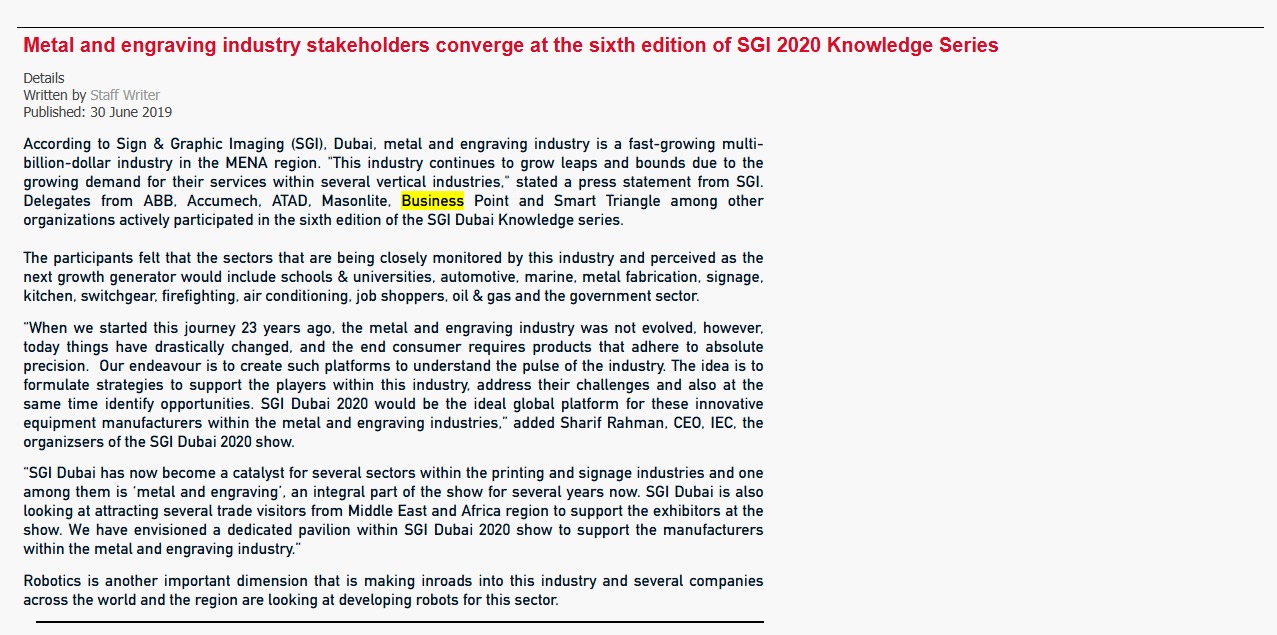
As a recognized industry leader, Business Point proudly participated in SGI Dubai to showcase digital printing machines calibrated for high-volume signage production across the UAE, Saudi Arabia and the GCC. Our product range includes UV printers, sublimation printers, flatbed UV printers, solvent printers, eco solvent printers and hybrid printers. We are mentioned in the event’s exhibitor announcement, alongside several well-known brands and businesses contributing to the industry. Our presence in the SGI Dubai exhibitor announcement reflects our connection with the wider printing and signage industry. Explore our printing and industrial machinery range to find suitable one for your production needs.
Also, Check Out Our SGI Dubai Event Highlights Video (2019 – 2024)
SGI Dubai 2019 – Showcasing our latest digital printing machines at SGI Dubai. Watch the highlights: [https://youtu.be/RZnjD9cW9WE] [https://youtu.be/MVXMp17whGU]
SGI Dubai 2020 – The future of digital printing machines unfolds at SGI Dubai. See the event videos : [https://youtu.be/SHPgbfXk25s] [https://youtu.be/0ltRPVyB72w]
SGI Dubai 2023 – Bringing together industry leaders and advanced digital printing machines at SGI Dubai. Experience it here: [https://youtu.be/UWIoG61WJgk]
SGI Dubai 2024 – A stage to present modernized digital printing machines. Check out our event highlights: [https://youtu.be/94gKmneM6cE]
Right Machine Starts With the Right Production Questions
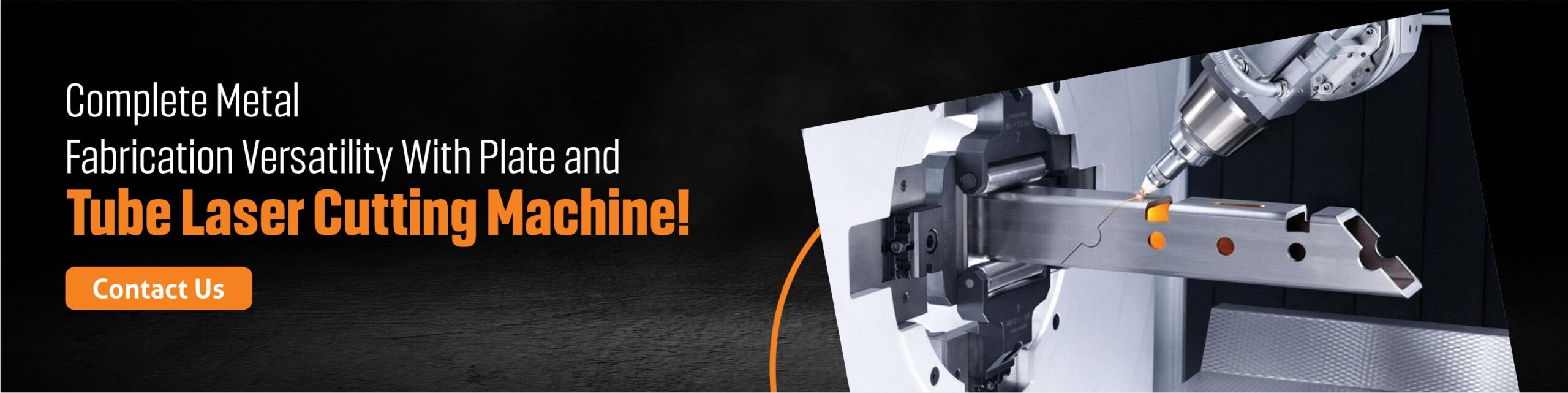
The plate and tube laser cutting machine can be a good addition to a fabrication company, however it depends on the work that it will be anticipated to deal with. The choice is more apparent when considering other factors besides the laser’s power or cost. Material mix, plate and tube size, production volumes, workflow and future needs should all be considered when evaluating. When you need to process flat parts as well as tubular parts frequently, and have no control over the cutting processes as the parts have to be sent out to a cutting shop, a combined laser cutting system could be a practical approach to gain more control over your production process.
One of the most important things to do before buying an investment machine is to determine your needs first and then compare machines based on those needs. This way, you can purchase equipment that will meet the needs of your business now and in the future. The goal is not simply to add a new machine to your workshop. It is to build a more capable and dependable production process.