The woodworking industry is no longer focused only on cutting and assembling wood. Manufacturers today are dedicated to the appearance, finishing and surface uniformity. This shift has made veneer more significant in manufacturing furniture, interiors, decorative panels and modular projects. Today’s shoppers are looking for flawless and high quality wooden finishes. Thus, manufacturers need to ensure the quality of their veneer products is kept throughout the manufacturing cycle. Joinery, even if performed correctly, can make a difference in the overall appearance of furniture or interior panels when veneer is used. With increased production, there is an increasing need for faster and cleaner veneer processing in factories.
 Why Better Veneer Joining Has Become Important
Traditional veneer joining methods often require more manual effort and additional production time. In many instances, misaligned or incorrect joining can lead to noticeable gaps after pressing and polishing. Lower overall finishing quality of the final product is possible. As a result, most woodworking companies today are moving toward machines that deliver improved precision and consistent performance. A veneer stitching machine assists the manufacturers in attaching the veneer sheet neatly and also helps them in smoother production process. It also aids in minimizing waste of materials and enhances the quality of the end products in the contemporary woodworking industries.
What is a Veneer Stitching Machine
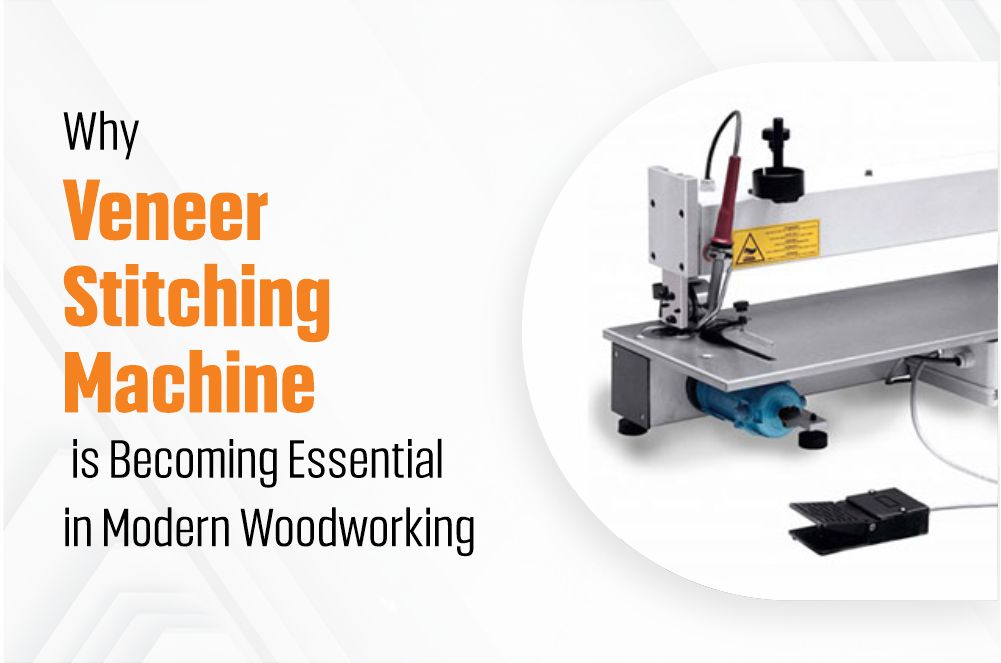
A veneer stitching machine is used to join small veneer sheets together to create larger veneer surfaces for furniture, plywood, doors, and decorative panels. The machine aids manufacturers to keep the proper alignment of sheets and to ensure the clean finishing during the production. Earlier, many industries relied on manual methods for joining veneer sheets.. But, manual labor took longer, and caused irregular holes between veneer sheets. Due to this, manufacturers began to shift their focus to machines that could process veneers faster and with greater precision.
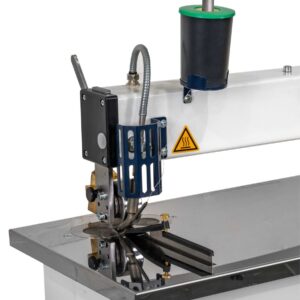
The operation of a veneer stitching machine is easy. The veneer sheets are laid side by side, and then the machine is used to connect the sheets together with the stitching thread technology. This can help to ensure that the sheets are in place correctly prior to pressing and additional manufacturing steps. Many woodworking industries employ veneer stitching machines today since it enhances the output speed, cuts down material waste and assists with superior surface completion on products.
Why Manufacturers Are Moving Toward Veneer Stitching Machines
Over the years, the expectations of customers in the woodworking industry have evolved greatly. The surface finishing, wood texture continuity and overall appearance are the key factors that buyers consider when selecting furniture or interior products today. This has led to a need for producing better veneer quality during manufacturing.
When larger decorative surfaces are needed, the easier and cleaner the veneer layouts can be produced using a veneer stitching machine. This is very helpful in scenarios such as conference tables, wall panels, wardrobes and modular furniture where a non stop design pattern enhances the overall look of the product. The other major reason is the rise of the decorative veneers used in the interior of modern times. In modern days, many companies have started to create unique wood ideas in various textures and finishes. As these design requirements evolve, manufacturers must have machines that can join veneer with greater accuracy and flexibility.
Production planning has also become more organized in modern factories. Rather than relying on a lot of manual processes, industries today are seeking equipment that can facilitate a seamless workflow transition from veneer preparation through pressing and finishing. With the help of the veneer stitching machine, it is easy to do this job and to coordinate the production. Woodworking manufacturers are shifting to modern production processes, further demanding machines to assist in accuracy, finishing quality and consistency of production.
Industries That Commonly Use Veneer Stitching Machine
Veneer stitching machines are used in many parts of the woodworking industry because decorative veneer finishing has become common in modern production. Properly joined veneer sheets are critical for furniture manufacturers when they are creating wardrobes, office furniture, tables, cabinets, and modular furniture. Continuous wood pattern is required for large furniture surfaces, and to get a good look, the proper veneer joining is recommended.
They are also used in a variety of other industries, including the production of plywood and decorative panels. Furthermore, many interior projects have a demand for a superior wood finish, making it more important than ever for manufacturers to have a more consistent wood surface during manufacturing. Support by stitching ensures the preparation of veneer sheets in a neat manner before pressing and lamination. Interior decoration companies also use veneer stitched sheets for partitions, wall panels, designer ceilings and luxury interior. Furthermore, veneer stitching machines are used in the door making industry for making decorative veneer layers for wooden doors and designer panel surfaces. The demand for veneer stitching machines is gradually increasing across woodworking industries as modern interior designs continue to prefer decorative wood finishes.

How Veneer Stitching Machine Improves Product Quality
Wood surface finishing plays a major role in modern furniture and interior production. The texture and pattern flow of the veneer and the finishing quality are typically the first things that customers see. Consequently, manufacturers pay more attention to the preparation of veneer prior to the product reaching the polishing and coating phases. In the case of veneer sheets, when it is joined properly, the end result is a cleaner, more natural look. A neatness is achieved by using a veneer stitching machine to keep veneer pieces correctly aligned. This is particularly helpful in large furniture panels and decorative wooden surfaces, where irregular joints can be a problem.
The machine also ensures that manufacturers have a consistent finish for various products. Businesses can program the veneer sheets to be manufactured in a more controlled manner prior to additional manufacture, rather than relying entirely on manual adjustments. In a number of factories smoother veneer preparation also aids in the subsequent stages of production. When veneer sheets are properly aligned, pressing, lamination and finishing processes are easier. This assists with the streamlined production flow and the resulting product quality.
Challenges Faced During Manual Veneer Joining
Not all industries in woodworking do not handle very thin veneer sheets. During manual methods of joining, veneers can readily bend, crack or misalign. With large veneer surfaces, proper pattern continuity is also difficult when workers are handling it manually. These slight misalignments can be seen later on after pressing and polishing.
There are also the problems of manual veneer joining that needs more care and more time to produce. This can affect the flow of operations in rapidly moving manufacturing operations from the veneer preparation to the final stages of manufacturing. As a result, numerous manufacturers are now looking for more stable and efficient veneer processing systems, which includes raw materials. For this reason, many manufacturers are now interested in finding more stable and efficient raw materials for the processing of veneer products.
Why Proper Veneer Preparation Matters
In woodworking production, veneer preparation is one of the key steps which has a direct influence on the finished product’s appearance. Uncontrolled gaps and irregularities of the surface can occur later in the coating and polishing processes if the veneer sheets are not laid flat correctly before pressing.
Good veneer stitching aids to manufacture clean veneer layouts prior to lamination and finishing. This results in smoother surface uniformity of furniture panels, decorative panels and wooden interior surfaces. This means that a business can have a better uniformity of the final products.
Industry Shift Toward Smarter Production
Time consuming manual processes are being phased out in the modern woodworking industry. Modern manufacturers increasingly want machines that will allow for more efficient management of processes and production. This is being facilitated by the use of veneer stitching machines that assist in production coordination and also facilitate handling of the veneer. In modern woodworking production, the ornamentation of wood products, which is still on the rise in the furniture and interior fields, will need accurate and reliable veneer processing solutions.
Future of Modern Woodworking with Veneer Stitching Machine
The woodworking industry is gradually pursuing a faster and orderly production method. Manufacturers are not just concerned with the quantity of production these days. Also, they desire improved finishing, less material waste, and more efficient management of the workflow in the factories. As a result, machinery that is capable of precision based production has become more significant in the day to day woodworking manufacturing. The modern method of manufacturing has now begun to include veneer stitching machines. The use of decorative wood finishes is increasingly being seen in furniture and interior applications and businesses are seeking reliable methods of preparing veneer for such applications that will allow them to meet quality and consistency requirements. Venner joining techniques help manufacturers to make cleaner wood surfaces, and enhance the appearance of the finished products.
Alongside this, the expectations of today’s consumers are also rising in the modern interior. These days, people are more inclined toward furniture and decorative wooden pieces that have smooth touch and high end finishes. The increasing demand is stimulating manufacturers to invest in machines that can enhance their production standards without compromising workflow efficiency. Automation and precision based woodworking systems will continue to grow throughout the industry in the years to come. Early implementation of advanced veneer processing solutions will give businesses a more comfortable process of maintaining production quality and dealing with evolving market demands. Business Point International provides cutting-edge woodworking and industrial machines that meet today’s woodworking requirements for manufacturers seeking to enhance veneer processing and woodworking efficiency.
Conclusion
The need for good veneer processing has been steadily rising with the improvement of the woodworking industry’s finishing standards and organized production processes. The veneer stitching machine is used to facilitate the manufacture of the veneer by improving the level of alignment, uniformity of the surface and general efficiency of the production process. Businesses are now increasingly turning to machines which can assist them to achieve cleaner production and reliable production quality from furniture making to decorative interior applications. Business Point International provides high-quality industrial and woodworking machinery solutions for modern manufacturing applications for companies seeking to upgrade their woodworking operations. Business Point International continues to assist businesses in enhancing production performance in various woodworking applications with a strong emphasis on quality machines and industry support.