
The reality that printing businesses face today is significantly different than it was before. The expectations of customers have increased, time has been shortened, and the material requirements have expanded to include paper and vinyl. Most printers still rely on traditional processes that find it difficult to fit hard surfaces, rush orders, and quality assurance. This mismatch of demand and capability creates daily production pressure. A flatbed UV printer alleviates these issues by redefining the printing process at the production level. Instead of modifying materials to suit the machine, the machine modifies to suit the material. Direct printing on rigid and flexible substrates and instant ink curing enable businesses to have more control over speed, quality, and reliability of output. The flatbed UV printer is not just a technological improvement. It is a viable solution to the operational problems that modern printing businesses face.
Real Time Printing Problems Faced by Today’s Businesses
Many printing businesses do not fail because of lack of demand. They struggle because daily production problems slowly reduce efficiency and profit. These problems appear small at first, but over time they block growth and consistency. In real production environments, printers face challenges like material rejection, delayed delivery, and repeated quality corrections. These issues are not occasional. They happen every working day.
Common real time problems include:
• Inability to print directly on rigid materials such as acrylic, wood, glass, metal, and tiles
• Long waiting time for ink drying which delays packing and installation
• Color variation between jobs leading to customer complaints
• High ink consumption and frequent reprints increasing production cost
• Manual handling and finishing steps that slow down workflow
 Why Conventional Printing Technologies Fail to Address These Challenges
For many years, solvent printing, eco solvent printing, and screen printing served the industry well. They matched the needs of that time when materials were limited and job volumes followed a predictable pattern. However, the printing environment has changed faster than these technologies can adapt. Traditional printers depend heavily on material compatibility. When a surface does not absorb ink properly, the output quality drops. This forces printers to rely on coatings, special media, or additional finishing steps. Each added step increases time, cost, and the risk of error. In a fast moving business environment, this delay becomes a serious limitation.
Another major issue lies in ink drying and handling. Conventional inks need time to settle and cure naturally. During this period, prints cannot be stacked, packed, or installed. Any accidental contact can damage the output. For businesses handling urgent orders, this waiting time disrupts the entire workflow. Customization is another weak point. Screen printing struggles with short runs and frequent design changes. Setup time remains high, even for small orders. As customer demand shifts toward personalized and limited quantity jobs, older technologies create more resistance than support. These limitations are not due to poor operation. They exist because the technology itself was not designed for today’s production demands.
What is a Flatbed UV Printer and How the Technology Works
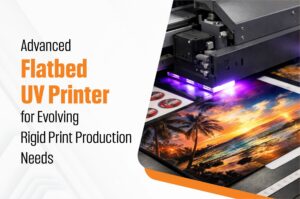
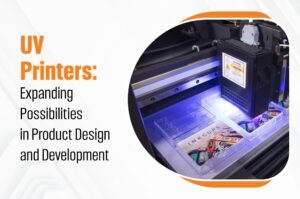
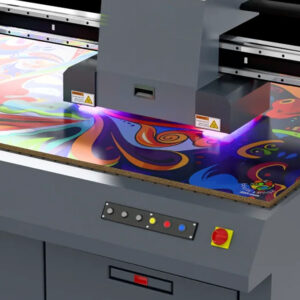
A flatbed UV printer is designed to print directly on rigid and flexible materials using UV curing technology. Unlike traditional systems, the ink does not rely on absorption or air drying. Instead, UV light cures the ink instantly on the surface. The material is placed on a flat vacuum table that keeps it stable during printing. As the print head moves, UV ink is applied and cured immediately using UV LED lamps. This instant curing locks the ink in place, resulting in sharp prints and consistent output. The process removes the need for drying time, lamination, or additional finishing steps, making the flatbed UV printer suitable for fast paced production environments.
How a Flatbed UV Printer Solves Real Time Printing Problems
A flatbed UV printer solves production challenges by simplifying the workflow. It allows direct printing on materials like acrylic, wood, glass, metal, and PVC without pre-treatment. This alone removes several manual steps from daily operations. Instant ink curing plays a major role in improving speed. Prints can be handled, packed, or installed immediately after printing. This reduces delays and helps businesses manage urgent orders more effectively.
Consistency is another key improvement. Controlled ink placement and immediate curing help maintain uniform color output across repeat jobs. As a result, reprints reduce and material wastage drops. Over time, this improves cost control and overall production stability.
Machine Workflow from Design to Finished Print Output
A flatbed UV printer begins at the design phase. The professional design software is used to create the print file. During this step, we work out the size, resolution and colors to be used, which must be appropriate to the material. After the design is complete, it is sent through RIP software. Such software governs color precision, ink layers and white ink. Making the final print look the way it should is by getting the file prepared right. Once the file has been processed, the material is put on the flatbed. The material is clamped to the vacuum table to ensure that it does not move when printing. Under rigid or heavy substrates it is important to ensure proper alignment. As soon as the set up is accomplished, the printing process starts. The print head moves smoothly over the surface. It transfers UV ink in precise, fine layers whereas the UV LED lamps cure the UV ink immediately.
When printing is completed, the output is ready for immediate use. There is no need for drying time or additional finishing. The printed material can be inspected, packed, or installed directly. This streamlined workflow allows printing businesses to maintain consistent quality while reducing production time and manual handling.

Business Advantages of Using a Flatbed UV Printer
A flatbed UV printer delivers more than just print quality. It changes how printing businesses operate on a daily basis. By reducing manual steps and production delays, it allows teams to focus on meeting customer demands rather than managing technical limitations. One of the most noticeable advantages is faster turnaround time. Since prints are ready immediately after printing, businesses can handle urgent orders without disrupting existing schedules. This ability improves client satisfaction and helps build long term relationships. Faster delivery often becomes a competitive advantage in crowded markets.
Another important benefit is flexibility. A flatbed UV printer supports a wide range of materials using a single system. This reduces dependency on multiple machines and external vendors. As a result, businesses can expand their service offerings while keeping operational complexity under control. Over time, this flexibility supports sustainable growth and better return on investment.
Why Choose Business Point International for Flatbed UV Printing Solutions
Choosing the right flatbed UV printer is not only about the machine. It is also about the partner who supports it throughout its working life. Business Point International understands the practical challenges faced by printing businesses and offers solutions that are aligned with real production needs. Business Point International provides flatbed UV printer options that focus on stability, print accuracy, and long term performance. Each machine is selected to support consistent output across different materials and job types. This helps businesses maintain quality while scaling their operations.
Support plays a critical role in machine performance. Business Point International offers installation guidance, operator training, and technical assistance to ensure smooth day to day operation. With experience in printing and industrial machinery solutions, the company acts as a reliable partner rather than just a supplier. This approach helps businesses invest with confidence and plan for long term growth.
Common Mistakes Businesses Make When Investing in a Flatbed UV Printer
Many businesses invest in a flatbed UV printer with high expectations but overlook practical decision factors. One common mistake is focusing only on the initial price. A lower cost machine may seem attractive, but performance inconsistency and frequent maintenance can increase long term expenses. Another mistake is ignoring after sales support. A flatbed UV printer requires proper installation, calibration, and operator training. Without reliable technical assistance, even a high quality machine can fail to deliver consistent results. Downtime caused by unresolved issues directly impacts production schedules. Some businesses also underestimate their actual production requirements. Choosing a machine that does not match material size or output volume limits growth potential. These mistakes are avoidable when purchasing decisions are based on long term usage rather than short term savings.
How to Select the Right Flatbed UV Printer for Your Business Needs
The first step to choosing the correct flatbed UV printer is to determine what you actually need to print. All the businesses have various sizes of materials, varying quantities of work, and their time constraints as well. Select a machine that meets the current requirements and is able to expand with you to eliminate the need to change machines early and to limit you. A first thing to consider is the size of the bed. There are some jobs which you cannot accept in case the bed is too small. When it is excessive, you waste money which you do not require. Select a bed that suits materials you use the most so that you can work effectively and not waste space. The speed of production and the quality of the print must also be able to accommodate the type of work you are doing daily.
Ink configuration is another important consideration. A flatbed UV printer with white ink capability supports printing on dark and transparent materials, expanding application possibilities. Ease of operation, software compatibility, and service availability should also influence the final decision. A well selected machine supports stable output, predictable costs, and long term business confidence.
Conclusion
The printing industry continues to evolve, and businesses that adapt their production methods stay ahead of changing demands. Challenges related to material compatibility, turnaround time, and consistent quality can slow growth when older technologies are used. Addressing these issues requires a solution that fits modern workflows. A flatbed UV printer offers that solution by simplifying production, reducing delays, and expanding printing capabilities. With direct printing on multiple surfaces and instant ink curing, businesses gain better control over quality and delivery timelines. When supported by the right technology partner, this investment becomes more than a machine purchase. It becomes a step toward long term stability and growth in a competitive printing market.