Printing on hard surfaces was one of the most challenging operations in printing over many years. Paper and flexible media developed fast but hard surfaces like wood, acrylic, metal, glass and boards posed all time constraints to printers. Firms relied mostly on indirect printing, manual pasting or multi stage printing that took time and escalated the cost. Consequently, it was never easy to reach consistency and quality. Conventional printing systems did not have an option of dealing with rigid substrates directly. Printers were forced to use stickers or vinyl wraps or screen printing to imprint designs with hard materials. However successful these measures were to some degree, they had brought about a number of challenges. There were problems of alignment.
 Adhesion was unreliable. The consistency of colors was not the same in each batch. Most importantly there was a reduction in the speed of production particularly in short run or customized production. The other issue of great concern was labor dependency. The printing on solid surfaces usually demanded the use of manual expertise at several points. The slightest of errors would mean wastage of materials, rework, or even refusal of the entire job. This not only impacted on profitability but also restricted the extent to which a business could expand. Several print shops just shunned any solid project involving the use of rigid materials due to the risk being greater than the reward.
But the expectations of the clientele also continued to increase. Consumers desired bright prints, long lasting finishes and shortened delivery schedules. They also desired customization in small numbers and the conventional processes could not accommodate it effectively. This disconnect between the capability and demand offered a distinct issue in the industry. It was not only a question of the quality of printing. It concerned workflow, efficiency and long term sustainability. The businesses needed to have a solution that would help to make the work easier, less manual, and provide the same results on various rigid materials. That necessity became the basis of a new attitude to flatbed printing that will subsequently transform the production process as a whole.
How the UV Flatbed Printer Changed the Printing Workflow
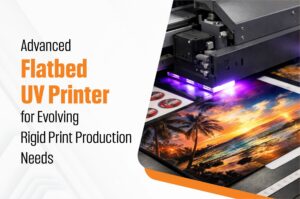
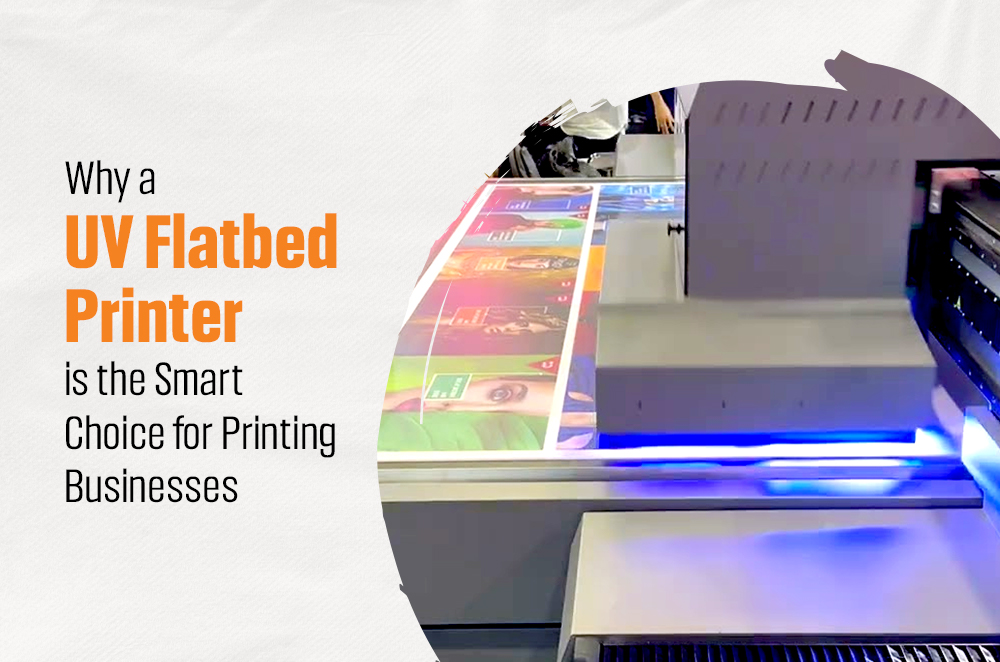
The coming up of the UV flatbed printer brought a significant change in the way in which printing on solid materials was to be done. Rather than trying to adapt the materials to the printing process, the workflow was re-designed to generate work directly on the material itself. This simplified production and eliminated a lot of the restrictions printers had been living with over the years. Using a UV flatbed printer, printing and curing are done simultaneously. The ink is deposited on the surface and it is instantly cured under UV light. It implies that no time is lost in the drying process and no extra operations are produced. Consequently, the printing to finishing or dispatching of materials takes place. This is the only improvement that has changed the turnaround times of most businesses.
The work process also became much more predictable. The ink dries instantly and therefore, there is a very little chance of smudging, bleeding of colors, or uneven finishes. Operators do not have to readjust processes when using various rigid materials. The printer is capable of producing identical output regardless of whether the surface is smooth, textured, thick or thin without elaborate alterations in settings. The other significant change is a decrease in the manual intervention. The previous procedures needed regular monitoring and correction. Conversely, the UV flatbed printer lets the operators concentrate on the job planning and quality checks and not on the physical handling. This results in the reduction of errors and efficient utilization of skilled labor.

This new workflow allows making scheduling and capacity planning easier in terms of production management. Tasks, which used to require days, can now be accomplished in hours. Custom orders and short run are more accepted and the businesses can respond faster to the demands of its clients without causing a potential break in production. Printing on rigid materials has been redefined by the UV flatbed printer by making the process of printing easier and integrating several steps into a single process. It is also not merely a machine upgrade but an overhaul of the entire workflow that allows speed, consistency and scalability.
Materials That Became Profitable After UV Flatbed Printing
Most rigid materials were thought to be challenging or unprofitable to print on before the use of UV flatbed printing. The time spent on the preparation of surfaces, indirect application of prints, and finishing tediousness, usually decreased margins. This caused companies to reduce their services and concentrate on the malleable media. This changed a lot with the introduction of UV flatbed printer. Hard boards, acrylic sheets, wood panels, metal plates, and decorative surfaces were feasible direct printing options. As the ink is fast sticking and the ink takes effect the moment that it is in contact, such materials in most cases do not need any finishing, laminations or further treatments. This saves in the number of preparation steps which translate to profitability.
The other significant change was due to the capability to manage short runs. Previously, the printing of the rigid materials was only sensible when it comes to the bulk orders, because of the set up time and the labor expenses involved. It is now possible to generate even a single off or amount of jobs without stalling the workflow. This will give way to bespoke products, sample products, and higher quality finishes that the clients would be willing to pay a higher price. Thickness variation was no longer allowed to be a limitation either. Flatbed printing enables various heights of the material being used to be printed without any complex adjustments. Such flexibility promotes the exploration of new substrates and innovative use. The businesses will be able to increase the variety of services provided without spending on various machines or processes.
Commercially, material versatility will result in improved use of resources. The printer may be utilized during the day in various tasks thereby saving on idleness. This simplifies production planning and it assists businesses to take various orders without fear. The UV flatbed printer enables the printing of businesses to go beyond the normal in transforming rigid materials into trusted sources of revenues. It allows it to grow by diversification and retain quality, time, and cost control.
Print Quality That Reduces Rework and Waste
The UV flatbed printer is used to create high-quality and consistent prints on hard materials. The instant cure eliminates smudging, bleeding of color, and smooth finishes, which minimize errors and waste of material. Exact position of ink keeps the consistency of all the jobs and the inks used are durable to scratches and to fading. This reliability reduces rework, saves time, and increases efficiency thereby enabling the businesses to produce high quality products at a bare minimum cost and effort.
Where UV Flatbed Printer Fit Best in Real Production Environments
Other businesses that are suitable to UV flatbed printers are numerous. Small print shops are able to deal with short-run and custom jobs effectively. Accurate, high-durability printing on boards, acrylic, and metal is beneficial to the signage companies. Prototypes and branding elements can also be in-house at industrial units, which will help cut costs. Businesses and creative studios can be able to provide customized products easily. These printers are versatile and, therefore, the printers are a brilliant choice in any production set up that demands quality and efficiency.
Long Term Value Beyond Just Printing Speed
There is more with investing in a UV flatbed printer than faster production. Its true worth is in efficiency, the savings of money and the opportunity to increase services without additional machines. Automation decreases the need to hire a large number of manual laborers, reduces the level of errors and enables the staff to concentrate on planning and control of quality. The flexibility of the printer allows companies to work with various materials and types of jobs with one machine to reduce the capital cost and conserve space. It is designed to last and maintain itself over the years with ease ensuring maximum returns on investments. Moreover, UV flatbed printers enable the companies to undertake customized projects, prototypes, and small batches and generate a new source of revenue. Generally, it is a long term asset that enhances productivity, minimizes costs, and business expansion.
Why Businesses Choose the Right UV Flatbed Printer Partner
Selecting the appropriate partner of a UV flatbed printer guarantees that your business achieves optimum out of the machine. An effective partner assists in picking up the appropriate configuration, installing and training, and offering the maintenance services to operate effectively. This saves time, safeguards your investment and enables businesses to concentrate on expansion. Companies can achieve maximum efficiency, quality and increase services with the proper guidance and be assured of its effectiveness.
Conclusion
The UV flatbed printer has revolutionized the manner in which companies go about printing on hard substances. It has provided small print shops, signage companies, and industrial units with new opportunities by streamlining work processes and ensuring high-quality and consistent output after minimizing rework and facilitating the ability to produce at a constant scale. It also has long-term benefits in terms of efficiency, flexibility, and lower costs of operation besides speed. Selecting the appropriate printer and a good partner will help businesses to harness all these advantages and increase services and remain competitive in an ever changing market. When purchasing a UV flatbed printer, it is not only about printing, but about expanding your business and making it upscale in quality, reliability and innovativeness.